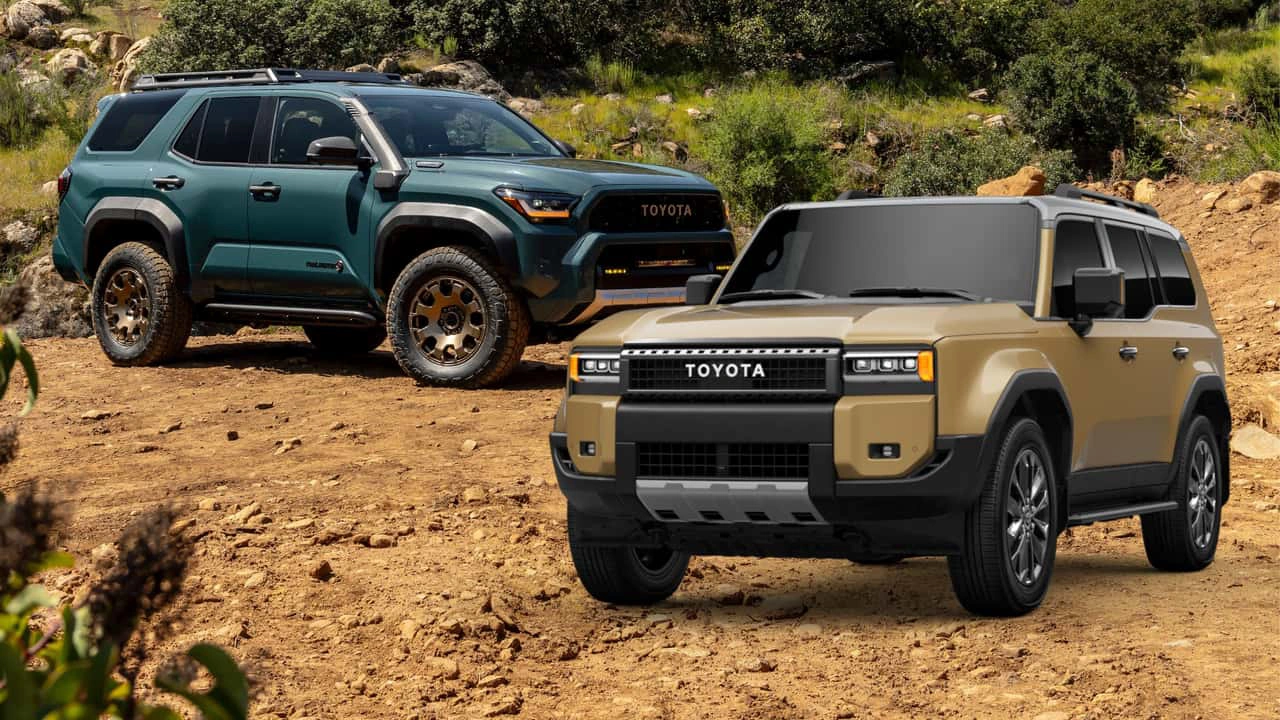
When it comes to Toyota Land Cruiser vs 4Runner, the debate starts immediately because both SUVs are legends in the off-road world, and both carry Toyota’s reputation for durability. But here’s the truth: these two vehicles serve very different types of drivers, even though they look similar on the surface.
If you’re deciding between these two icons, this guide breaks everything down clearly—no hype, no fluff, just real analysis based on ownership experience, off-road engineering, and daily usability.
Toyota Land Cruiser vs 4Runner Comparison Table
| Feature | Toyota Land Cruiser | Toyota 4Runner |
|---|---|---|
| Vehicle Size | Full-size SUV | Mid-size SUV |
| Drivetrain | Full-time 4WD | Part-time 4WD |
| Engine Focus | Torque & durability | Simplicity & reliability |
| Interior | Luxury-oriented | Utility-focused |
| Off-road Use | Extreme expeditions | Trails & weekend use |
| Fuel Economy | Lower | Better |
| Towing Capacity | Higher | Moderate |
| Maintenance Cost | Higher | Lower |
| Resale Value | Extremely high | Very high |
| Ideal Buyer | Global traveler | Daily adventure driver |
Design Philosophy and Road Presence
Land Cruiser: Built for the World
The Land Cruiser looks solid because it truly is solid. It is wider, taller, and heavier than the 4Runner, giving it a commanding and authoritative presence on the road. Toyota engineered this SUV for long-distance travel in extreme environments rather than for short recreational trips. Every design decision favors durability, stability, and load-bearing strength.
A real-world example reinforces this philosophy. In many parts of Africa and the Middle East, Land Cruisers are used by aid organizations, governments, and NGOs because they have proven over decades that they can operate reliably where other vehicles fail. This is not marketing hype—it’s a reputation earned through global use.
4Runner: Built for the Driver
The 4Runner, by comparison, feels more compact and agile. Its smaller footprint makes it easier to drive through city streets, park in garages, and maneuver on narrow trails. Toyota intentionally designed it to balance ruggedness with everyday comfort, making it a more realistic option for most drivers.
If you live in a city but enjoy camping, hiking, or light off-roading on weekends, the 4Runner feels more practical. It delivers adventure without demanding constant compromises in daily life.
Engine Performance and Power Delivery
One of the most important technical discussions in Toyota Land Cruiser vs 4Runner comparisons centers on engine strength and power delivery.
The Land Cruiser historically relied on large V8 engines known for their durability and torque. In newer generations, Toyota shifted toward turbocharged V6 and hybrid systems that emphasize efficiency without sacrificing low-end pulling power. These powertrains deliver massive torque at low RPMs, smooth highway cruising, and the ability to haul heavy loads across long distances with ease.
The 4Runner takes a different approach. It continues to use a naturally aspirated V6 engine—an old-school design that prioritizes simplicity and reliability. While it does not feel as powerful as the Land Cruiser, it delivers predictable performance, easier maintenance, and consistent behavior off-road.
From an analytical perspective, the Land Cruiser feels effortless at speed and under load, especially on highways or when towing. The 4Runner, on the other hand, feels more mechanical and engaging, particularly on trails where driver input matters more than raw power.
Off-Road Capability: Where Legends Are Made
Both SUVs use a body-on-frame construction, which already places them ahead of most modern crossovers in terms of durability and trail capability.
The Land Cruiser excels in extreme off-road environments. Its full-time four-wheel-drive system, locking center differential, advanced terrain management systems, and higher towing capacity allow it to maintain traction and stability in harsh conditions. This makes it ideal for long expeditions where terrain unpredictability is the biggest challenge.
The 4Runner shines in recreational off-roading scenarios. Its part-time four-wheel-drive system, available rear locking differential, and specialized trims like the TRD Pro make it highly capable on trails. Excellent approach and departure angles allow it to navigate rocks, forest paths, and uneven terrain with confidence.
For rock crawling, weekend trail runs, and adventure-focused driving, the 4Runner is often easier to manage and more playful. The Land Cruiser, while incredibly capable, prioritizes control and endurance over agility.
Interior Comfort and Technology
Land Cruiser Interior Experience
Inside, the Land Cruiser feels closer to a luxury SUV than a traditional off-roader. High-quality leather, larger infotainment screens, better sound insulation, and generous rear-seat space create a refined environment. Toyota designed the interior for long journeys where comfort matters as much as capability.
This makes the Land Cruiser an excellent choice for families, long-distance travelers, and drivers who want premium comfort without sacrificing ruggedness.
4Runner Interior Experience
The 4Runner interior is more utilitarian by design. It focuses on durability rather than luxury, using hard-wearing materials that can handle dirt, mud, and heavy use. Physical buttons replace touch-heavy controls, making operation easier when wearing gloves or driving on rough terrain.
This interior layout is ideal for owners with active lifestyles, pets, outdoor gear, and a preference for function over refinement.
Reliability and Longevity
Toyota’s reputation for reliability plays a major role in Toyota Land Cruiser vs 4Runner comparisons.
The Land Cruiser is legendary for lasting well beyond 300,000 miles with basic maintenance. Toyota intentionally overbuilds it because it is used globally in environments where mechanical failure can have serious consequences. Every component is designed to withstand long-term abuse.
The 4Runner is also extremely reliable, largely because it relies on older, proven components. Its simpler engineering reduces failure points and makes repairs more straightforward.
The key distinction is clear: the Land Cruiser is over-engineered, while the 4Runner is simple and durable. Both are excellent, but the Land Cruiser is better suited to surviving neglect and extreme conditions.
Fuel Economy and Ownership Costs
Ownership costs are often the deciding factor for many buyers.
The Land Cruiser comes with a higher purchase price, increased insurance costs, lower fuel economy, and more expensive parts and maintenance. These costs reflect its size, complexity, and premium positioning.
The 4Runner offers a more accessible ownership experience. It has a lower entry price, better fuel economy, cheaper parts, and lower long-term costs. This balance of durability and affordability is why many buyers ultimately choose it.
For drivers who want Toyota reliability without luxury-level expenses, the 4Runner makes financial sense.
Daily Driving Experience
If this SUV will serve as your daily driver, the difference becomes even more important.
The Land Cruiser feels smooth and stable on highways but can feel bulky in city traffic and tight parking spaces. Its size demands more attention in urban environments.
The 4Runner feels easier to live with on a daily basis. It is more maneuverable, easier to park, and less demanding during routine errands. Fuel stops, maintenance visits, and city driving all favor the 4Runner, especially for urban drivers.
Resale Value and Market Demand
Both SUVs hold their value exceptionally well, but for different reasons.
Land Cruisers often increase in value after discontinuation due to limited supply and global demand. They are sought after by collectors and long-term owners who understand their durability.
4Runners consistently rank among the highest resale-value SUVs in North America because of their reliability, practicality, and strong demand in the used market.
Collectors tend to favor the Land Cruiser, while practical buyers overwhelmingly choose the 4Runner for everyday ownership.
Conclusion
The Toyota Land Cruiser vs 4Runner debate ultimately comes down to how you plan to use your SUV and what you value most as a driver. Both vehicles represent Toyota’s commitment to reliability and off-road engineering, but they serve two very different lifestyles. The Land Cruiser stands as a global icon built for extreme durability, long-distance travel, and demanding environments where failure is not an option. It offers unmatched toughness, refined comfort, and long-term investment value, making it ideal for buyers who prioritize endurance and premium capability.
On the other hand, the 4Runner delivers a more balanced and accessible experience. It provides serious off-road performance without the high ownership costs or oversized footprint of the Land Cruiser. For daily driving, weekend adventures, and practical ownership, the 4Runner feels easier to live with while still offering the rugged confidence Toyota is known for.
In the end, Toyota Land Cruiser vs 4Runner is not about which SUV is better overall—it is about which one fits your real-world needs. If you want a legendary expedition vehicle with global credibility, the Land Cruiser is unmatched. If you want dependable adventure without compromise, the 4Runner remains one of the smartest SUV choices on the road today.
FAQs: Toyota Land Cruiser vs 4Runner
Is the Toyota Land Cruiser better than the 4Runner?
It depends. The Land Cruiser is better for extreme travel and luxury, while the 4Runner is better for daily use and affordability.
Which is more reliable, Land Cruiser or 4Runner?
Both are extremely reliable. The Land Cruiser is more overbuilt, but the 4Runner’s simplicity makes it easier to maintain.
Is the 4Runner cheaper to own?
Yes. Fuel, insurance, and maintenance costs are all lower compared to the Land Cruiser.
Which SUV is better for off-roading?
For extreme terrain, Land Cruiser wins. For trails, camping, and recreational off-roading, the 4Runner is often more fun.
Why is the Land Cruiser so expensive?
Toyota builds it for global markets with extreme durability standards, not just comfort or styling.

I’m Waqas, an electric vehicle enthusiast and tech writer with over 6 years of experience covering the EV industry. I write in-depth articles, comparisons, and reviews to help readers understand the fast-evolving world of electric mobility. From battery technology to EV launches and charging trends, I aim to make complex EV topics simple, engaging, and informative for everyday drivers and curious readers alike.