By a car enthusiast who’s been following EVs for years | May 2026
So last month a friend of mine sent me a photo on WhatsApp. It was a Renault 4, but something looked different. The roof was gone. Not like a sunroof-slightly-open kind of gone — actually open, folded back, full sky above the passengers. I stared at it for a solid 30 seconds thinking, “Wait, is that even real?”
It was. And honestly, it’s one of the most interesting things to happen in the EV space this year.
The Backstory Nobody Talks About
Here’s the thing most people don’t know. Back in the 1960s, Renault made something called the Renault 4 Plein Air — a stripped-down, open-top version of the original R4 where they literally removed the doors, roof, and tailgate and replaced them with a simple fabric covering. It was basically a beach buggy that could also do school runs. Totally mad. Totally French.
Fast forward to 2026, and Renault has done it again — except this time it’s fully electric, fully modern, and has actual safety regulations to deal with.
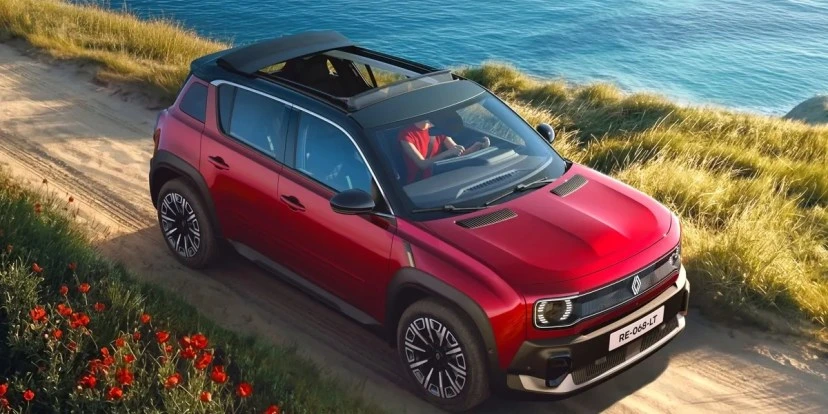
The new version is called the Renault 4 E-Tech Electric Plein Sud — “Plein Sud” meaning “due south,” evoking blue skies and sunshine. And unlike the original Plein Air, which replaced the entire roof and doors with fabric, the Plein Sud takes a more civilised approach with an electrically powered canvas roof.
What Actually Makes This Different
The EV market right now is honestly a bit boring. Every new electric car looks like a rounded rectangle. They all have the same giant touchscreen, the same fake grille, the same “we’re eco-friendly” vibe. There’s nothing wrong with any of them, they’re just… samey.
This Renault breaks that mould in the most straightforward way possible: it opens up.
The retractable fabric roof transforms the battery-powered hatchback into a cut-price convertible at the push of a button. Renault has even launched a special “Plein Sud” trim — obviously inspired by the historic Renault 4’s Plein Air variant from the late 1960s.
To give passengers in both rows a true open-air experience, the roof opening had to be as large as possible. The result: 92 centimetres in length and 80 centimetres in width. The fabric roof can be opened by pressing a button on the vehicle key, a button beside the interior mirror, or even by voice command through the car’s built-in assistant — and it works in various intermediate positions too.
That last bit surprised me the most. Voice command. You can just say “open the roof” and off it goes. That’s genuinely cool, not just a spec sheet bullet point.
The Specs — The Stuff That Actually Matters
Let me save you the Google spiral. Here’s what you need to know:
Range & Battery The Plein Sud sits on the same platform as the regular R4, giving it a competitive 250–275 mile range — more than sufficient for city driving, short trips, and weekend getaways.
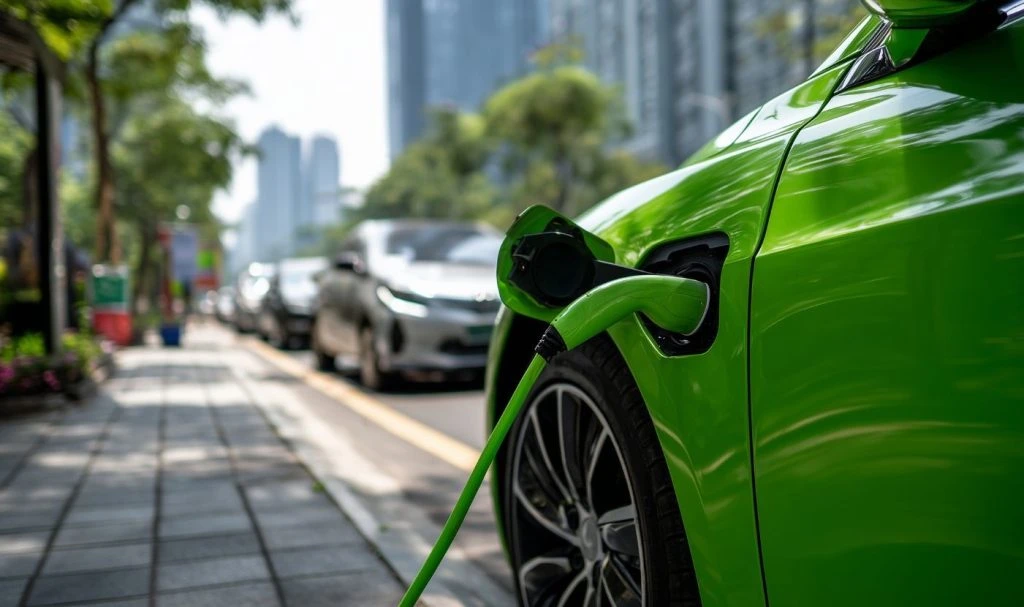
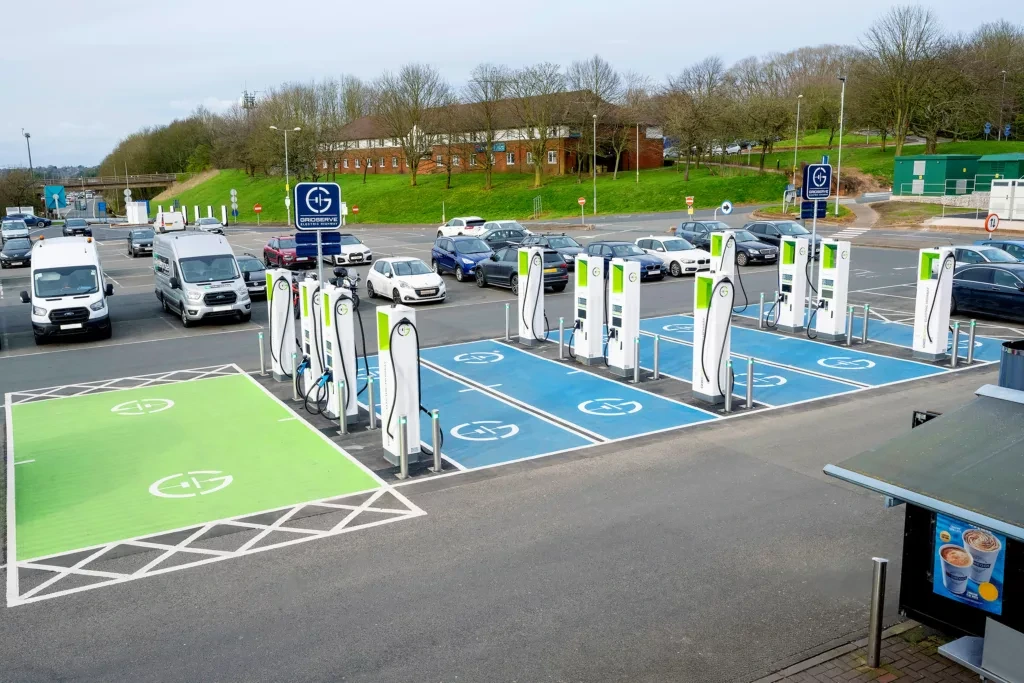
Charging Rapid charging peaks at 100kW, which means a 10–80% top-up in around 35 to 40 minutes. Every version also gets vehicle-to-load (V2L) charging, so you can use the car’s battery to power electrical devices outside the car.
That V2L feature is underrated for open-top trips. Imagine driving to a beach, parking up, and running a portable speaker or small cooler straight from the car battery. That’s exactly the kind of use case this car was designed for.
Pricing In the UK, the Plein Sud version starts from £27,445 after the Electric Car Grant — that’s £1,500 more than the standard R4. For Europe, prices start from €37,290 for the Techno trim and €39,290 for the Iconic trim, before government incentives.
For a proper open-top EV that also seats four adults comfortably? That’s genuinely competitive pricing.
How the Roof Actually Works (Step by Step)
I’ve seen a lot of confusion online about this, so let me break it down simply:
Step 1 — Press, speak, or click your key fob You have three ways to open it: button inside the cabin near the mirror, the car key itself, or a voice command. No digging through menus.
Step 2 — It folds in three sections, not four Renault made a deliberate choice to have the canvas fold into three sections rather than four when opening. This reduces overall weight and increases efficiency. Less weight = slightly better range. Smart.
Step 3 — Set it to the position you want It’s not just fully open or fully closed. You can stop it partway — a slight tilt for airflow on a motorway without full wind blast. Useful for those of us who don’t want our hair turned inside-out at 70mph.
Step 4 — Acoustic liner does the heavy lifting when closed Renault drew on the expertise of partners Webasto and Haartz to give the Plein Sud a roof lined for superior acoustics and sealing, with no trade-off in weight. Essentially: when it’s shut, you shouldn’t really know it’s a canvas roof.
Where It Sits Among Rivals
Here’s what I find genuinely impressive. Along with the Fiat 500e, the Renault 4 Plein Sud is the only electric car with four seats and a fully opening roof. That’s it. Two options. In the entire EV market.
The Fiat 500e cabriolet is lovely but it’s a two-seater in any practical sense and starts at a higher price point. The Renault gives you proper rear seats, a bigger boot, and a proper family-usable body. That’s a real gap it fills.
The Honest Downsides (Because Nothing’s Perfect)
I’d be doing you a disservice if I just gushed without being real about the trade-offs.
No roof bars. The hole in the roof means roof bars are removed, along with the shark-fin antenna, to maximise the opening. If you’re a cyclist or someone who roof-racks their luggage regularly, that’s a genuine loss.
Canvas roofs and motorway noise. Every reviewer who’s driven a canvas-top car at speed will tell you the same thing — it’s always a bit noisier than a metal roof, even great ones. Canvas roofs have a habit of sounding better in a press release than they do at highway speed. Fair warning — Renault has done the engineering to minimise it, but physics is physics.
It’s not a full convertible. This is a panoramic canvas roof, not a drop-top. If you want the full wind-in-your-hair, arms-out-the-window convertible experience, this isn’t quite it. Renault is careful not to oversell the idea — the Plein Sud is still a closed-body car built for everyday use, not a substitute for a classic convertible.
Rear passengers lose headroom slightly. The canvas folds somewhere, and that somewhere is above the rear seats. Not a disaster, but taller adults in the back might notice it.
Who Is This Car Actually For?
This is the question I kept coming back to. And honestly? It’s for a very specific type of person — and I mean that in the best way.
If you live somewhere with at least a few sunny months a year, do mostly urban or suburban driving, want something that turns heads without a sports car price tag, and you’ve been quietly disappointed that EVs have become so sensible — this car is for you.
It’s also a strong option if you were already considering the regular R4 (which is a genuinely excellent car in its own right) and just want a bit more personality for £1,500 extra. That’s not a big premium for something this distinctive.
The Bigger Picture — Why This Matters
Just when modern EVs are starting to feel like interchangeable tech pods on wheels, Renault has decided to bring a little romance back into the equation.
That’s exactly it. The EV transition is real and it’s happening — but somewhere along the way we started accepting that electric cars have to be boring. Efficient, sure. Impressive in range and technology, absolutely. But boring.
Renault, with this car, is making an argument that electric and joyful aren’t mutually exclusive. The R5 proved that a modern EV can have retro charm. The R4 Plein Sud goes one step further and says: it can have open skies too.
Renault’s broader electric plan involves launching 16 fully battery-electric vehicles by 2030, and if the Plein Sud is any indication of the direction they’re going — mixing genuine nostalgia with modern engineering — that’s a very exciting pipeline to watch.
Final Thoughts
When my friend sent me that photo last month, my first reaction was novelty. Cool gimmick. Nice marketing.
But the more I dug into it — the roof engineering, the pricing, the lack of real competitors in this space, the fact that it’s based on an already well-reviewed platform — the more I realised this is actually a properly considered product. It’s not just a marketing stunt.
It won’t be for everyone. If you need roof bars, hate wind noise, or just don’t care about open-top driving — stick with the standard R4 and save yourself £1,500. That car is excellent too.
But if a little bit of you has always wanted to drive something that feels alive — that connects you to the sky and the city around you, while being totally electric — the Renault 4 Plein Sud might be exactly what you didn’t know you were waiting for.
Sometimes, the most interesting cars are the ones that refuse to take themselves too seriously.

I’m Waqas, an electric vehicle enthusiast and tech writer with over 6 years of experience covering the EV industry. I write in-depth articles, comparisons, and reviews to help readers understand the fast-evolving world of electric mobility. From battery technology to EV launches and charging trends, I aim to make complex EV topics simple, engaging, and informative for everyday drivers and curious readers alike.