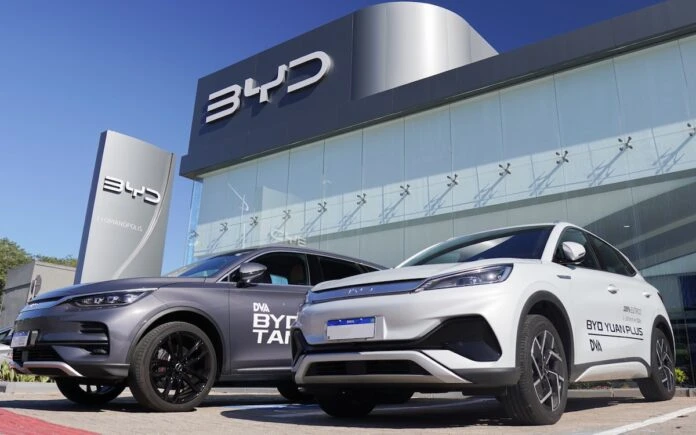
Chinese EV giant BYD is rapidly becoming one of the strongest players in the global electric vehicle industry. Over the past few years, the company has expanded far beyond China and is now aggressively targeting overseas markets. The latest growth in BYD overseas electric vehicle sales shows how quickly the brand is gaining popularity across Europe, Southeast Asia, Latin America, and other international regions.
As demand for affordable electric vehicles continues to rise, BYD is positioning itself as a serious competitor to global automakers like Tesla, Volkswagen, and Kia.
BYD’s Global Expansion Strategy
One of the biggest reasons behind the rise in BYD overseas electric vehicle sales is the company’s aggressive global expansion strategy. BYD is entering multiple international markets at the same time instead of focusing only on China. The company has already launched electric vehicles in countries across Europe, Asia, South America, and the Middle East.
Unlike many traditional automakers, BYD focuses heavily on affordability while still offering advanced technology and modern features. This strategy allows the company to attract buyers who want electric vehicles at competitive prices without sacrificing performance or quality.
Rapid Growth in Overseas Sales
BYD’s overseas sales have grown dramatically in recent years. The company has reported record-breaking exports as global demand for EVs continues to increase. Europe has become one of BYD’s fastest-growing regions, with strong sales in countries like Germany, the United Kingdom, Spain, and the Netherlands.
At the same time, BYD is also expanding quickly in Southeast Asia, where EV adoption is accelerating due to government incentives and rising fuel prices. Markets such as Thailand and Singapore have shown strong demand for BYD models because of their lower prices and practical features.
This rapid international growth highlights how BYD is transforming from a domestic Chinese automaker into a global EV powerhouse.
Popular BYD Models Driving Overseas Sales
Several BYD models are playing a major role in boosting international sales. Vehicles like the BYD Dolphin, BYD Seal, and BYD Atto 3 have become especially popular in overseas markets because they offer strong range, modern technology, and competitive pricing.
The BYD Seal, in particular, is often compared with Tesla’s Model 3 due to its sleek design and performance-focused features. Meanwhile, the Atto 3 has gained attention as an affordable electric SUV suitable for everyday driving.
These models help BYD compete in multiple vehicle categories, from compact hatchbacks to family SUVs.
Why BYD Is Challenging Global Automakers
The success of BYD overseas electric vehicle sales is creating major pressure on traditional automakers. One of BYD’s biggest advantages is cost efficiency. The company manufactures its own batteries and many key components, allowing it to reduce production costs significantly.
This vertical integration gives BYD the ability to offer EVs at lower prices compared to many competitors. In addition, the company is rapidly innovating in battery technology and charging efficiency, which further strengthens its position in the global market.
As a result, many established brands are now being forced to reduce prices and increase EV production to stay competitive.
Battery Technology and Competitive Advantage
BYD’s battery technology is one of the key reasons behind its global success. The company’s Blade Battery has gained attention for improved safety, durability, and efficiency compared to traditional battery designs.
This technology not only helps reduce costs but also improves consumer confidence in EV safety and performance. Combined with competitive pricing, BYD’s battery innovation has become a major selling point in overseas markets.
Impact on the Global EV Market
The growth of BYD overseas sales is reshaping the global electric vehicle industry. More affordable EVs are increasing competition and making electric mobility accessible to a larger number of consumers. This trend is also accelerating the transition away from petrol and diesel vehicles in many countries.
At the same time, BYD’s expansion is forcing global automakers to rethink their pricing strategies and accelerate innovation. This increased competition ultimately benefits consumers through better technology, lower prices, and more choices.
Challenges Facing BYD Overseas Expansion
Despite its success, BYD still faces several challenges in international markets. Brand recognition remains lower compared to long-established automakers in some regions. Trade regulations and tariffs may also impact expansion plans in certain countries.
In addition, competition in the EV market is becoming increasingly intense, especially as more companies launch affordable electric models. BYD will need to continue improving technology, customer support, and infrastructure partnerships to maintain its momentum.
Future of BYD Overseas Electric Vehicle Sales
The future looks very strong for BYD’s international business. As EV demand continues to rise worldwide, the company is expected to expand into even more markets over the next few years. Analysts believe BYD could become one of the world’s largest EV exporters if current growth trends continue.
With aggressive pricing, strong battery technology, and a rapidly expanding global presence, BYD is well-positioned to play a major role in the future of electric transportation.
Conclusion
The rise in BYD overseas electric vehicle sales marks a major shift in the global automotive industry. What started as a domestic Chinese EV company has now evolved into a serious international competitor challenging some of the world’s biggest automakers.
As BYD continues expanding across global markets, consumers can expect more affordable electric vehicles, stronger competition, and faster innovation in the EV industry. The company’s rapid growth clearly shows that the future of electric mobility is becoming increasingly global.

I’m Waqas, an electric vehicle enthusiast and tech writer with over 6 years of experience covering the EV industry. I write in-depth articles, comparisons, and reviews to help readers understand the fast-evolving world of electric mobility. From battery technology to EV launches and charging trends, I aim to make complex EV topics simple, engaging, and informative for everyday drivers and curious readers alike.