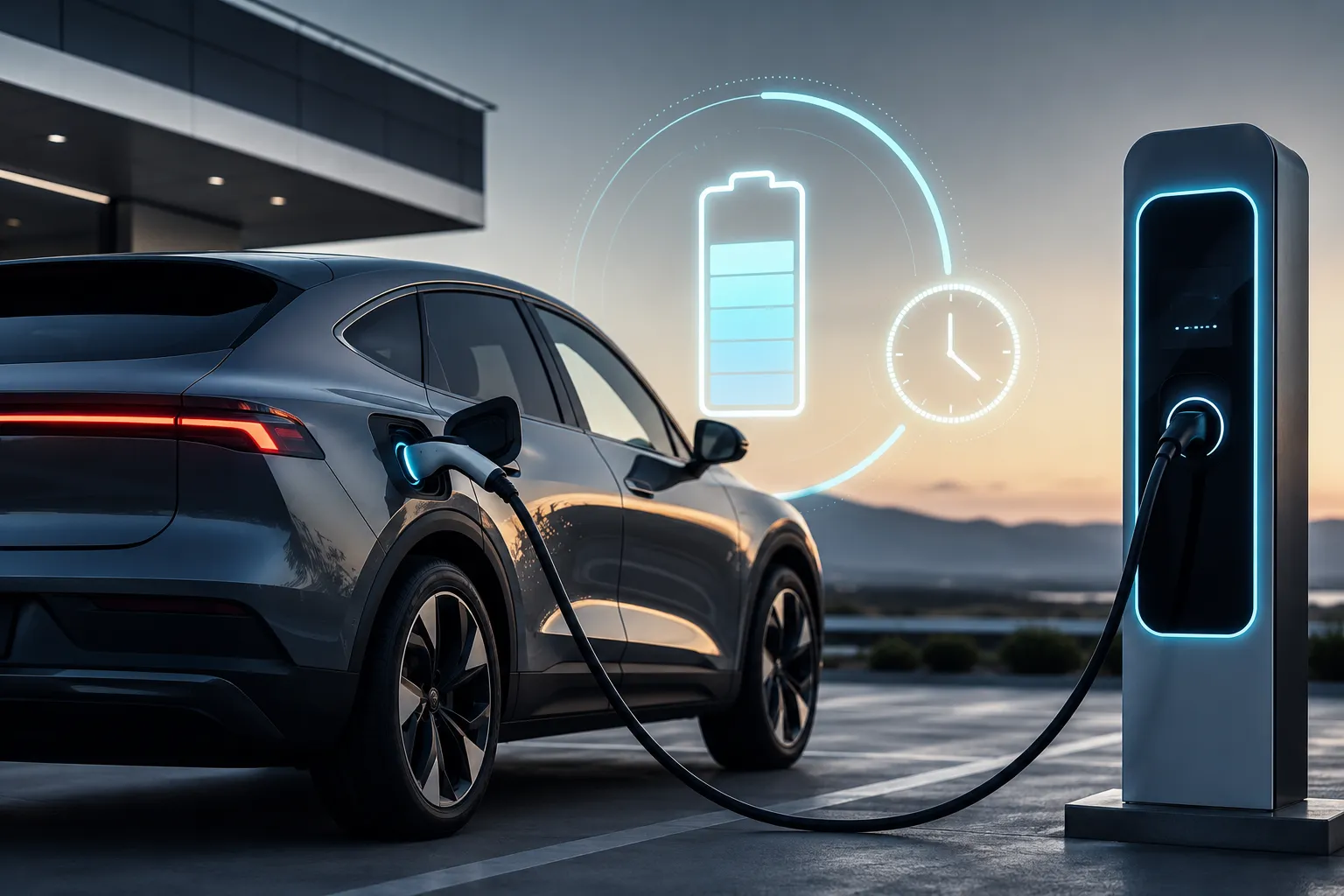
The first thing that surprises most people about electric cars is not the quiet drive or the instant acceleration. It is the charging.
Not because charging is difficult, but because it does not work like filling a gas tank.
With a petrol or diesel car, you stop, fill up, pay, and leave. Five minutes and you are done. With an electric vehicle, charging depends on where you plug in, how empty the battery is, what charger you use, how fast your car can accept power, and even the weather.
That sounds complicated at first. But after a few days of living with an EV, you start thinking about charging more like your phone. You do not always wait until it is dead. You plug it in when it fits your routine.
So, how long does it take to charge an electric vehicle?
The honest answer is: anywhere from 30 minutes to more than 24 hours.
The useful answer is: most EV owners charge overnight at home, while road-trip fast charging usually takes around 20 to 45 minutes for a practical top-up.
Let’s break that down in a way that actually makes sense in daily life.
The Short Answer: EV Charging Time Depends on the Charger
Before getting into examples, here is the simple version.
A standard wall outlet is slow. A home Level 2 charger is much faster. A public DC fast charger is the quickest option.
A normal household outlet can add only a small amount of range per hour. It works, but it feels slow if you drive a lot.
A Level 2 home charger is the sweet spot for most EV owners. You plug in at night and wake up with enough range for the next day.
A DC fast charger is what you use on road trips or when you need a quick charge away from home.
The mistake many new EV buyers make is asking, “How long does it take to charge from 0 to 100%?”
In real life, that is not usually how people charge.
Most drivers do not reach 0%. Most also do not need 100% every day. Many people charge between 20% and 80%, because that is faster and easier on the battery.
Level 1 Charging: The Slow Emergency Option
Level 1 charging means plugging your EV into a regular household outlet.
This is the slowest way to charge an electric vehicle. Depending on the car, it may add around 3 to 5 miles of range per hour.
That means if you plug in for 10 hours overnight, you may only add 30 to 50 miles of range.
For some people, that is enough.
If you work from home, drive short distances, and only use the car for groceries, school runs, or local errands, Level 1 charging can work. It is not exciting, but it can be practical.
Where it becomes frustrating is when your battery is low and you need the car again the next morning.
Imagine coming home with 20% battery and plugging into a normal wall outlet. You wake up and the car has gained some range, but not a full charge. That is when many new EV owners realize they need a better home setup.
Level 1 is best for:
- Plug-in hybrids
- Low-mileage drivers
- Emergency backup charging
- People who drive less than 30 miles a day
- Temporary charging before installing a Level 2 charger
It is not ideal for:
- Long daily commutes
- Large battery EVs
- Road trips
- Families sharing one EV
- Anyone who regularly forgets to plug in
One lesson many owners learn quickly: Level 1 charging is fine until your schedule changes. A surprise trip, cold weather, or extra errands can make it feel too slow.
Level 2 Charging: The Best Home Charging Setup
Level 2 charging is what most EV owners really want at home.
This usually uses a 240-volt outlet or a dedicated wall charger. It is much faster than a regular outlet and can often add around 20 to 30 miles of range per hour, depending on the car and charger.
In real life, this means you can plug in after dinner and wake up with a comfortable battery level.
For example, let’s say your EV has around 250 miles of range and you come home with 35% battery. You plug in at 9 PM. By morning, the car is ready for your commute, errands, and maybe even an unexpected trip.
That is why Level 2 charging changes the whole EV ownership experience. You stop thinking, “Where will I charge?” and start thinking, “I’ll just plug in when I get home.”
A full charge on Level 2 may take around 6 to 12 hours, depending on the battery size and charger speed. But again, most people are not charging from completely empty.
For daily use, Level 2 charging is usually more than enough.
DC Fast Charging: Best for Road Trips, Not Daily Use
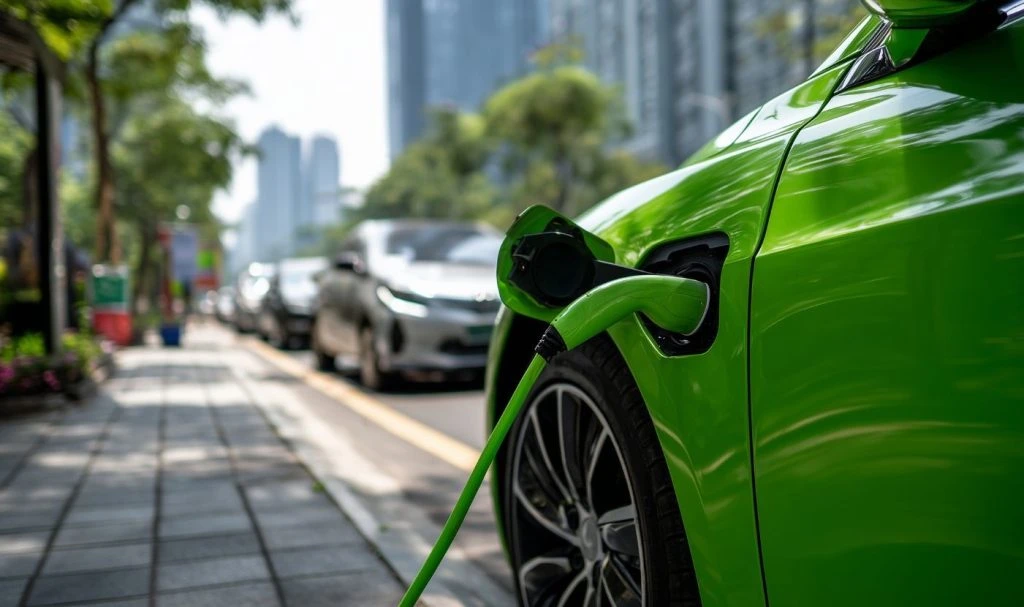
DC fast charging is the type of charging you see at highway stations, shopping centers, and major travel routes.
This is where EV charging starts to feel closer to a fuel stop, although it still usually takes longer than filling a gas tank.
A good DC fast charger can take many EVs from around 10% to 80% in about 20 to 45 minutes. Some cars are faster. Some are slower. The charger speed matters, but the car matters just as much.
This is where a lot of confusion happens.
You might see a charger labeled 150 kW or 350 kW and think your car will charge at that speed the whole time. It usually will not.
Your EV has its own maximum charging speed. If your car can only accept 100 kW, plugging into a 350 kW charger will not magically make it charge at 350 kW.
Also, charging slows down as the battery gets fuller.
That is why road-trip charging advice usually says: charge to 80%, not 100%.
The first part of the battery charges faster. After 80%, the car slows charging to protect the battery. Waiting from 80% to 100% can sometimes take almost as long as charging from 20% to 80%.
That was one of the biggest “oh, now I get it” moments for many new EV drivers. The fastest road-trip strategy is not filling the battery completely. It is stopping more efficiently.
Why the Last 20% Takes So Long
Think of charging an EV battery like filling seats in a cinema.
When the cinema is empty, people can quickly walk in and sit anywhere. But when it is almost full, everyone has to move carefully, find the remaining seats, and slow down.
EV batteries work in a similar way.
From a low battery percentage, the car can accept power quickly. But as the battery gets closer to full, the charging system slows down to protect the battery cells.
This is why your EV might charge very fast from 20% to 60%, then slow down after 80%.
For daily driving, you usually do not need 100%. Many EV owners set the daily charging limit to 80% or 90%, depending on the vehicle and their driving needs.
Use 100% when you need it, like before a long trip. But for normal daily use, charging to 80% is often enough.
Real-World Charging Examples
Let’s make this practical.
Example 1: Daily commute
You drive 35 miles a day.
With Level 1 charging, you may recover that range overnight if the car is plugged in long enough. It can work, but there is not much room for extra driving.
With Level 2 charging, this is easy. You might recover the whole day’s driving in one or two hours.
Example 2: Low battery after a busy weekend
You come home Sunday night with 15% battery.
With a normal wall outlet, you may still have a low battery Monday morning.
With Level 2 charging, you will likely be fine by the time you wake up.
With DC fast charging, you could stop for 30 minutes and get enough range quickly, but it may cost more than home charging.
Example 3: Road trip stop
You are driving on the highway and stop at 18% battery.
Instead of charging to 100%, you charge to 75% or 80%, grab coffee, use the restroom, and leave.
That is usually the better road-trip habit. You save time and keep moving.
What Affects EV Charging Time?
Charging time is not just about the charger. Several things can speed it up or slow it down.
1. Battery size
A bigger battery usually takes longer to charge.
A small EV with a 40 kWh battery will charge faster than a large electric SUV with a 100 kWh battery if both are using similar chargers.
This is like filling a small water bottle versus a large tank.
2. Current battery percentage
Charging from 20% to 80% is much faster than charging from 80% to 100%.
If you are using a fast charger, avoid sitting there just to reach 100% unless you truly need it.
3. Charger speed
A wall outlet, Level 2 charger, and DC fast charger are very different.
This is the biggest reason charging times vary so much.
4. Vehicle charging limit
Every EV has a maximum charging rate.
Some can accept very high-speed charging. Others are more modest. The charger may be powerful, but your car decides how much power it can safely take.
5. Temperature
Cold weather can slow charging.
Batteries like moderate temperatures. In winter, charging may take longer, especially if the battery is cold when you arrive at a fast charger.
Many EVs have battery preconditioning, which warms the battery before fast charging. Apps and built-in navigation systems often handle this if you set the charger as your destination.
6. Charger condition and sharing
Public chargers do not always perform perfectly.
Sometimes a charger is limited, busy, broken, or sharing power with another car. This is one reason EV owners use apps before arriving.
Useful apps include PlugShare, ChargePoint, Electrify America, Tesla app, ABRP, and Google Maps. These can help you check charger locations, plug types, recent user reviews, and sometimes live availability.
How to Estimate Your EV Charging Time
You do not need to be an engineer to estimate charging time.
Use this simple method.
First, check how much battery you need to add.
For example, if your EV has a 75 kWh battery and you want to go from 20% to 80%, you are adding 60% of the battery.
60% of 75 kWh is 45 kWh.
Now divide that by the charger speed.
If your home charger delivers around 7 kW, then:
45 kWh ÷ 7 kW = about 6.4 hours
Real-world charging may take a little longer because charging is not always perfectly efficient, but this gives you a good estimate.
For DC fast charging, the math is less exact because the charging speed changes during the session. Your car may start fast, then slow down as the battery fills.
That is why charging apps and the car’s dashboard estimate are usually more useful than manual math at fast chargers.
Common Mistakes New EV Owners Make
Mistake 1: Thinking they need 100% every day
You usually do not.
Charging to 80% or 90% is enough for most daily driving. Saving 100% for longer trips can make ownership easier and better for the battery.
Mistake 2: Relying only on public chargers
Public charging is helpful, but home charging is the real convenience.
If you can install Level 2 charging at home, the EV experience becomes much smoother.
Mistake 3: Using a fast charger like a fuel pump
A DC fast charger is not always a “fill to full” stop.
It is usually better to charge enough to reach your next stop with a safe buffer.
Mistake 4: Ignoring charger reviews
A station may show up on the map, but that does not mean it is working well.
Before going to a public charger, check recent reviews in PlugShare or the network’s app.
Mistake 5: Not planning for winter
Cold weather can reduce range and slow charging.
If you live in a colder area, leave extra battery buffer and use preconditioning when available.
Is Home Charging Worth It?
For most EV owners, yes.
A Level 2 home charger is one of the best upgrades you can make after buying an electric vehicle. It saves time, reduces stress, and usually costs less per mile than public fast charging.
You do not necessarily need the most expensive charger. What matters is that the charger matches your car, your home electrical setup, and your daily driving needs.
Before installing one, talk to a qualified electrician. Your electrical panel may need to be checked. Some homes can handle a Level 2 charger easily, while others may need upgrades.
Also check whether your utility company offers EV charging plans. Some electricity providers have cheaper off-peak rates at night, which can make home charging even better.
How Long Should You Charge an EV Each Night?
Most people do not need to think about hours every night.
Set your charging limit, plug in, and let the car handle it.
For example, you can set the car to charge to 80% and schedule charging during cheaper electricity hours. Many EVs and chargers allow this through their apps.
Tesla, FordPass, Hyundai Bluelink, Kia Connect, ChargePoint, Wallbox, and other platforms often let you monitor charging, set limits, and check battery status from your phone.
The best routine is simple:
Plug in when you get home.
Let the car charge during off-peak hours if possible.
Wake up with enough range.
That is the part people do not always understand before owning an EV. You may spend less time “going somewhere to charge” because your car charges while you sleep.
So, How Long Does It Really Take?
Here is the practical answer.
A regular wall outlet can take more than a day for a large EV battery if you need a big charge.
A Level 2 home charger usually takes several hours and is perfect for overnight charging.
A DC fast charger can add a useful amount of range in around 20 to 45 minutes, depending on the vehicle, charger, battery level, and conditions.
For most daily drivers, the real answer is overnight.
You plug in at home, go inside, and forget about it.
For road trips, the real answer is usually one coffee break, not a full battery refill.
Once you understand that, EV charging feels a lot less confusing. It becomes less about waiting and more about planning around the car’s natural routine.
And honestly, that is the biggest lesson: do not treat an electric vehicle exactly like a gas car.
Charge when it is convenient, avoid unnecessary 100% fast-charging stops, use the right apps, and install Level 2 charging at home if you can.
Do that, and charging an electric vehicle becomes much easier than most people expect.

I’m Waqas, an electric vehicle enthusiast and tech writer with over 6 years of experience covering the EV industry. I write in-depth articles, comparisons, and reviews to help readers understand the fast-evolving world of electric mobility. From battery technology to EV launches and charging trends, I aim to make complex EV topics simple, engaging, and informative for everyday drivers and curious readers alike.